The story in brief
In October 1347, twelve galleys row into Messina carrying something no one can see. In four years it kills a third of Europe. Doctors blame the planets, crowds blame their Jewish neighbors, and a pope says no. Then a small republic on the Adriatic makes ships wait thirty days, and the world learns a new word: quarantine.
The chapters
-
Chapter 1 · 5 min · Free
News from the East
A cemetery in the mountains of Central Asia, a siege on the Black Sea, and twelve galleys sailing west.
Sources: Gravestones of Kara-Djigach and Burana (1338 to 1339); Gabriele de’ Mussi (about 1348); Ibn al-Wardi (1348); Spyrou et al., Nature (2022)
-
Chapter 2 · 5 min · Free
Twelve Galleys
A harbor that welcomes the ships, a sickness that kills in days, and a map of Europe going dark, port by port.
Sources: Michele da Piazza, Historia Sicula (chronicle to 1361); The Grey Friars’ chronicle of Lynn (1348); Guy de Chauliac, Chirurgia magna (1363)
-
Chapter 3 · 5 min
The Witnesses
A city loses more than half its people in a summer, and two writers decide that someone must tell the future what happened.
Sources: Giovanni Boccaccio, Decameron (about 1349 to 1353); Agnolo di Tura, Cronaca senese (1348); Petrarch, Familiares VIII, 7 (1349)
-
Chapter 4 · 5 min
Stars, Sins and Scapegoats
The doctors of Paris blame the planets, penitents whip their own backs, and a lie about poisoned wells costs thousands of innocent lives.
Sources: The Paris medical faculty, Compendium de epidemia (October 1348); Guy de Chauliac, Chirurgia magna (1363); Clement VI, Quamvis perfidiam (26 September 1348); Jakob Twinger von Königshofen, chronicle of Strasbourg
-
Chapter 5 · 5 min
Forty Days
A small republic on the Adriatic makes ships wait thirty days, peasants find out what their work is worth, and a doctor in a straw hut finally sees the killer.
Sources: The Great Council of Ragusa, Liber Viridis (27 July 1377); The Ordinance of Labourers (1349); Alexandre Yersin, Annales de l’Institut Pasteur (1894); Dean et al., PNAS (2018)
Who’s who
The people you meet. Each one is a hero card you can collect.
- Ibn al-WardiHistorian of Aleppo · Traced the Plague’s Road · Wrote to the End
- Michele da PiazzaSicilian Chronicler · Messina, 1347 · Wrote It Down
- Giovanni BoccaccioWriter · Voice of 1348 · The Decameron
- Guy de ChauliacPhysician to the Popes · Stayed in Avignon · Survived the Plague
- Alexandre YersinBacteriologist · Found the Plague Bacillus · Hong Kong, 1894
- Pope Clement VIPope in Avignon · Defended the Jews · Stayed Through the Plague
What you’ll be able to tell
This story belongs to the journey “Invisible Killers”. By the end of it, you can tell how quarantine, public health and radiation rules were born from the people who saw the danger first.
Stories in this journey
- The Black Death: A Third of Europe
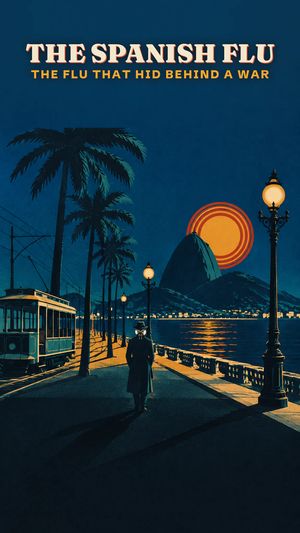
- The Spanish Flu: The Flu That Hid Behind a War
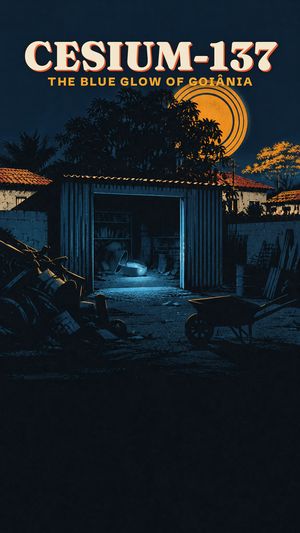
- Cesium-137: The Blue Glow of Goiânia
Sources
- Michele da Piazza
- Boccaccio, Decameron
- Petrarch
- Guy de Chauliac
- Clement VI, Quamvis perfidiam (1348)
- The Great Council of Ragusa (1377)
- Yersin (1894)